

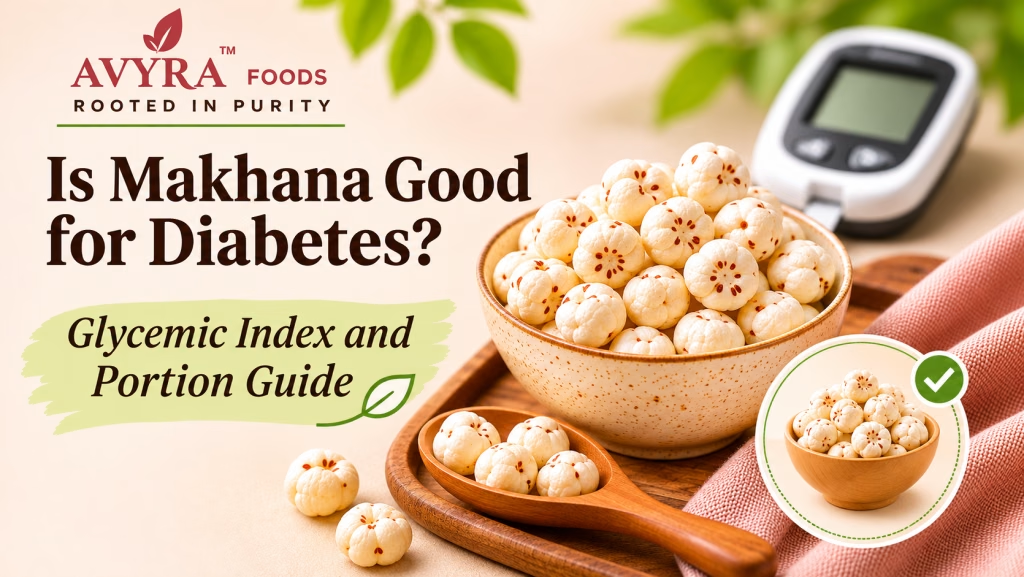
Search “snacks for diabetes” and makhana (fox nuts) appears near the top. The reason is its glycemic index, a number that shows how quickly a food raises blood sugar. Before you reach for a bowl, it helps to know what that number does and does not tell you.
What is the glycemic index?
The glycemic index (GI) ranks carbohydrate foods from 0 to 100 by how fast they raise blood sugar. A GI of 55 or less is called low. Lower GI foods tend to raise blood sugar more slowly than high GI foods such as white bread or sugary drinks.
What do we know about makhana?
One small trial of 10 people measured the GI of roasted makhana at about 37, which is low. Makhana is also a good source of fibre, which slows how quickly carbohydrate is absorbed. Together, that makes plain makhana a sensible snack choice compared with refined, fried snacks.
A note on the evidence
The study we found is small, and much of what is written online about makhana comes from wellness blogs, not clinical research. Use the numbers as a guide, and use your own glucose readings as the real test.
A sensible portion
Guides for people with diabetes usually suggest about 30 g of makhana at a time, roughly one cupped handful. Portion matters because makhana is still a carbohydrate food, and a large bowl will still raise blood sugar.
- Choose plain makhana, dry roasted or with a little ghee.
- Skip sugar, caramel and heavily salted coatings.
- Pair it with protein such as curd, paneer or roasted chana to slow things further.
- Note how you feel and, if you test, check your readings after trying it.
Smart ways to eat it
- Dry roast with black pepper and a pinch of rock salt.
- Mix with a few almonds or roasted chana for a balanced snack.
- Crush it into a raita with curd and cumin.
Tip: Look at the whole day, not one snack. Makhana helps most when it replaces a fried or sweet snack, not when it is an extra.
When to talk to your doctor
If you take insulin or diabetes medicines, ask your doctor or dietitian how makhana fits into your meals. Food, medicine and activity work together, and your doctor knows your numbers.
Our 100% makhana packs (Classic and Jumbo) have a single ingredient and are tested at an NABL accredited lab, so you know exactly what you are eating. See the reports on our Test Reports & Certifications page.
Please note
This article is general information about food, not medical advice. If you have a health condition or take medicines, speak to your doctor or a registered dietitian before changing your diet.